
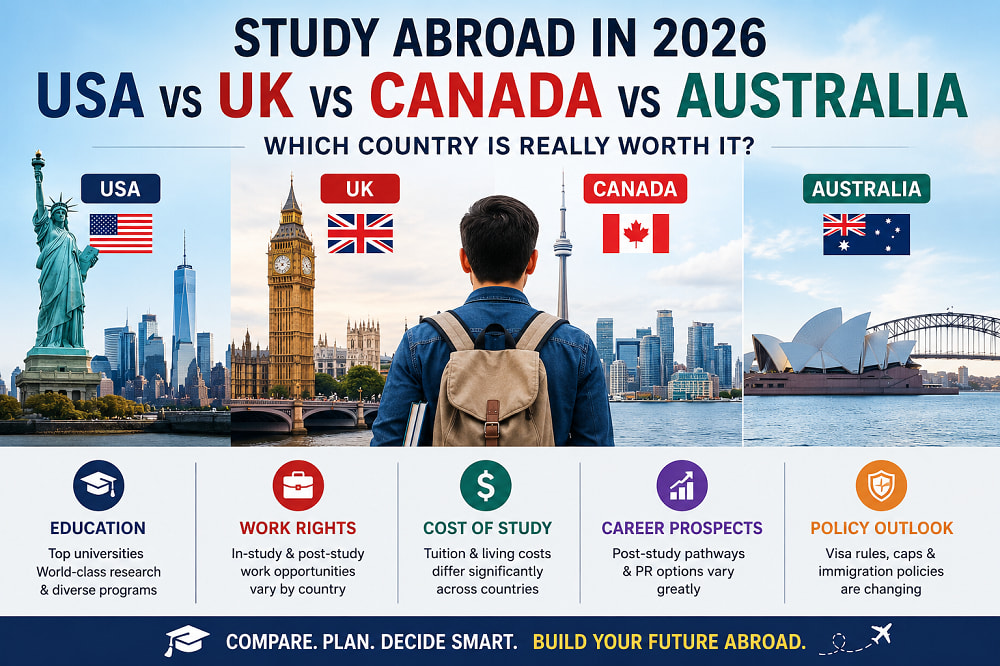
The dream of studying abroad hasn’t disappeared in 2026, but the rules have changed. Students can no longer assume that one destination automatically offers the best opportunities. Governments are tightening immigration policies, adjusting post-study work pathways, and increasing financial requirements. At the same time, competition for visas has become more intense across major destinations.
For international students, the real question is no longer where the most prestigious universities are located. The more important question is which country offers the best combination of education quality, work opportunities, affordability, and long-term career prospects.
Why 2026 Is a Turning Point for Global Education
International education is entering a new phase. The United States has experienced a significant decline in new international student enrolments, while countries such as Canada, the United Kingdom, and Australia are redesigning their student migration systems.
Think of studying abroad today like choosing an investment portfolio. A decade ago, most investors placed their money in a few obvious options. Today, successful investors compare risk, return, and future growth before making a decision. International students must now take the same approach.
Each destination offers distinct advantages, but each comes with new challenges that did not exist just a few years ago.
The United States: Maximum Career Potential, Maximum Uncertainty
The United States remains the world’s largest destination for high-paying careers in technology, finance, engineering, and research. Graduates from leading American universities continue to secure some of the highest salaries available anywhere.
For students pursuing artificial intelligence, data science, cybersecurity, software engineering, or advanced business analytics, the American job market still offers unmatched opportunities. The STEM Optional Practical Training program remains a major advantage for graduates who qualify.
The challenge is uncertainty. Visa approvals have become less predictable, screening requirements have increased, and immigration policies continue to evolve. Students must prepare for a more complex process than previous generations experienced.
The United States works best for ambitious students who are comfortable managing risk and who have strong academic profiles. The rewards remain enormous, but the pathway is no longer straightforward.
The UK’s Fast-Track Education Model
The United Kingdom continues to attract students who want internationally respected qualifications without spending many years in university.
One-year master’s degrees remain one of the country’s strongest selling points. Students can earn a postgraduate qualification in half the time often required elsewhere, reducing tuition costs and accelerating entry into the workforce.
The UK’s strengths are especially clear in law, finance, economics, international relations, public policy, media, and creative industries. Employers worldwide still place significant value on degrees from established British institutions.
However, post-study work opportunities are becoming more limited. Future changes to the Graduate Route mean students must plan their career strategy much earlier than before.
For students seeking a quick, high-quality qualification with global recognition, the UK remains highly competitive.
Canada’s Appeal Goes Beyond Education
Canada has built its reputation on offering both quality education and realistic immigration pathways. While new study permit limits have created additional competition, the country remains one of the most attractive destinations for students who want long-term settlement opportunities.
The Canadian approach increasingly focuses on labour market needs. Graduates in healthcare, engineering, education, technology, and skilled trades often benefit from stronger employment prospects and immigration options.
Financial planning has become more important because proof-of-funds requirements have increased. Students can no longer rely heavily on part-time employment to cover living expenses.
Many international students also seek academic support when adapting to Canadian university expectations. Resources such as Expertsmind.com’s subject expert network can help students understand assignment requirements, improve academic performance, and maintain the strong grades often needed for scholarships, internships, and future immigration opportunities.
Canada remains a strong choice for students who value stability, structured career planning, and potential permanent residency pathways.
Australia Is Emerging as a Strong Alternative
Australia has become one of the most interesting study destinations in 2026. While other countries have focused heavily on restrictions, Australia has increased its international student intake and continues to invest in higher education.
The country performs particularly well in nursing, engineering, information technology, teaching, construction, and healthcare-related disciplines. Graduates often benefit from labour shortages in key sectors, creating attractive employment opportunities after graduation.
Australia’s lifestyle also remains a major draw. Cities consistently rank highly for safety, quality of life, and student satisfaction.
That said, students face higher living-cost requirements, increased visa fees, and stricter eligibility standards. Australian authorities now expect applicants to demonstrate clear educational and career objectives before approval.
Students who can meet these requirements often find Australia offers a balanced combination of education, work opportunities, and lifestyle benefits.
What Matters More Than Country Rankings
Many students spend months comparing university rankings while overlooking factors that may have a greater impact on their future.
Your chosen field of study often matters more than the country itself. A nursing student may achieve stronger outcomes in Australia, while a machine learning specialist could find better opportunities in the United States. Similarly, a student pursuing international law or finance may benefit significantly from the UK’s academic strengths.
Financial preparation is equally important. Across all major destinations, governments increasingly expect students to demonstrate sufficient funds before arrival. Part-time work should be viewed as supplementary income rather than a primary funding source.
Perhaps most importantly, students need contingency plans. Immigration rules can change, job markets can shift, and personal circumstances can evolve. The most successful international students are those who remain adaptable.
The Best Choice Depends on Your Goal
There is no universal winner in 2026.
The United States remains the leader for students seeking the highest earning potential and access to elite employers. The United Kingdom offers speed, prestige, and efficiency. Canada continues to appeal to those pursuing long-term settlement and structured career pathways. Australia provides a compelling mix of opportunity, lifestyle, and growing demand for skilled graduates.
The era of choosing a destination simply because it is popular has ended. Students who succeed in 2026 will be those who match their academic goals, financial situation, career ambitions, and risk tolerance with the country that best supports those objectives.
Study abroad is still one of the most powerful investments a student can make. The difference now is that success depends less on following the crowd and more on making an informed decision.