

Canadian employment report exhibits weakness; USD/CAD pair rises
According to data released by Statistics Canada, the unemployment rate rose from 6.5% in January to 6.7% in February, surpassing the consensus forecast of 6.6%. Simultaneously, the employment change recorded a significant contraction of 83,900 jobs, far below the market expectation of a 10,000-job increase and deepening the previous month’s contraction of 24,800. As these figures indicate broad weakness in the domestic labour market, the Canadian dollar depreciated by 0.62% against the US dollar, closing at 1.3718.
In parallel, the US Dollar Index (DXY) appreciated by 0.75% to settle at 100.49—its highest level since May 2025. The greenback has strengthened in recent weeks as escalating energy prices, particularly in oil, gasoline, and natural gas, fuel anxieties regarding a potential rebound in inflation. Market participants anticipate that if headline inflation faces upward pressure, the Federal Reserve may maintain a more “hawkish” or restrictive monetary policy stance. In contrast, the Canadian inflation rate remains closer to the Bank of Canada’s target, sitting at 2.3% as of the January release.
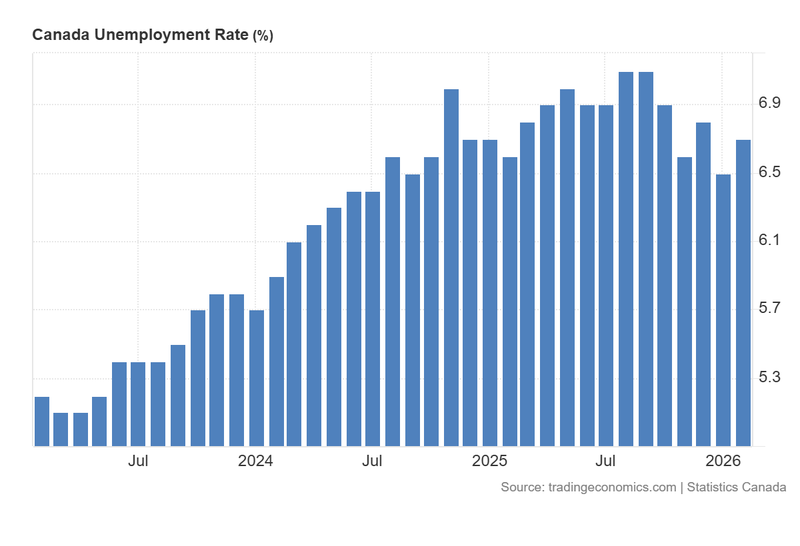
Figure 1. Canada Unemployment Rate (2023-2025). Source: Data from Statistics Canada; chart obtained from Trading Economics.
Technical analysis of the USD/CAD pair
From a technical perspective, the USD/CAD pair is undergoing a notable demand reaction near a structural support level. Key observations include:
- Trend Context: In the long term, the USD/CAD pair is oscillating within a consolidative pattern, positioned close to a primary structural support. While the price is currently trading below its long-term moving averages (50, 100, and 200 periods), it is actively testing a significant short-term resistance ceiling.
- Resistance Levels: Should the short-term resistance at 1.3725 be breached to the upside, the next major target is identified at 1.3905. A decisive break above this level would suggest the potential for a sustained extension into higher price territories.
- Support Levels: If the short-term support at 1.3550 is invalidated to the downside, the next relevant floor is located at 1.3450, a structural medium-term support. A breach of the 1.3450 zone would significantly increase the probability of a deeper market correction.
- Momentum Indicators: Both the Moving Average Convergence Divergence (MACD) and the Relative Strength Index (RSI) are trading near neutral zones. However, the MACD is currently ascending following a bullish divergence, suggesting a potential strengthening of upward momentum.
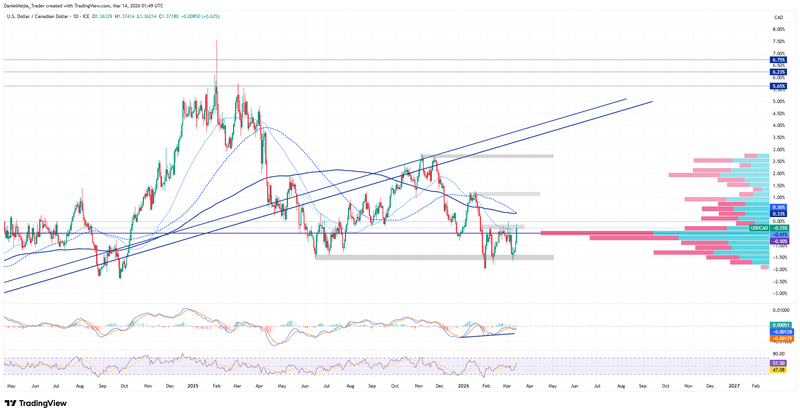
Figure 2. USD/CAD pair (2024-2026). Source: Data from the Intercontinental Exchange (ICE); own analysis conducted via TradingView.