

Post-October 7 Israel has become a sought-after work destination for thousands of foreign workers who have arrived to fill the vacuum left by Palestinian laborers, and by Israelis who have long since lost interest in jobs that require manual labor, long hours on their feet or sitting at a cash register.
7 View gallery

Foreign workers at a Yohananof branch in Modi’in: ‘Customers say we’re better than Israeli workers’
(Photo: Danal Kopel)
Some 240,000 foreign workers are currently employed in Israel, and the number is expected to keep rising. What began as an emergency solution for agriculture and caregiving has in recent months expanded to garages, supermarkets, hotels and construction sites. Knesset discussions have even been held on the possibility of employing foreign workers as kindergarten assistants to address the severe staffing crisis in the education system.
For Israeli employers, it is almost a dream come true: hardworking, polite, disciplined employees who arrive on time, do not argue over every shift and are willing to work for the average Israeli wage, which places them in the upper income brackets in their home countries.
The phenomenon already has, and will continue to have, enormous economic and social consequences. Israel’s labor market is changing before our eyes. It is nothing less than a revolution.
For the foreign workers, Israel is an economic opportunity, and the security situation, missiles and sirens do not deter them. “On the news abroad it looks scarier. Our families worry about us, but we reassure them that life here goes on as usual,” workers say.
Surprising as it may sound to Israelis, foreign workers consider Israel a desirable destination, even compared with other countries. They say that in Saudi Arabia and the Gulf states, the attitude toward them is often humiliating and racist, experiences they encounter less often in Israel.
“It’s true that Israeli customers sometimes shout or rush me impolitely, or look at me in an unpleasant way,” said a foreign worker from Sri Lanka employed in the cheese department of a supermarket chain in central Israel. “But most customers are nice. Some ask me where I’m from, whether I have children, how they manage without me and whether I’m doing well in Israel.
“Many customers tell me we are better than Israeli workers because we are not on the phone all the time, we do not disappear for smoke breaks and we work quickly. I have friends who worked in Saudi Arabia and Qatar and say they were treated like slaves. Here is better. There, they can withhold your salary for months or deduct money without explaining, and if you dare complain, they immediately deport you.”
At the new Shlomo Group garage in Holon, the floor is spotless, the cars are all raised on hydraulic lifts, and the mechanics, once an Israeli archetype immortalized in comedy sketches, are now foreign workers from India.
Nearly 100 mechanics were brought to the Holon garage. Since the war, the shortage of Palestinian workers, and of working hands in general, has damaged entire industries and nearly brought some to collapse, until the state eased permits for bringing foreign workers into additional sectors.
Not far from the Shlomo Group garage, at a Hatzi Hinam supermarket branch in Holon, workers from Sri Lanka can also be found.

According to Moshe Nakash, head of the Foreign Workers Administration at the Population and Immigration Authority, a government decision states that the number of foreign workers must not exceed 3.3% to 4% of the total population, meaning about 400,000 workers.
“Today there are 240,000 foreign workers in Israel, an unprecedented number because of significant growth since October 7,” he said. “In 2024, 53,000 foreign workers entered the country across all sectors. In 2025, another 62,300 entered, and this year another 20,000. Before the war, there were only 140,000 workers in agriculture and caregiving.”
Asked what the chances are of opening additional sectors to them, Nakash said the authority rests with a directors-general committee on foreign workers established two years ago by government decision.
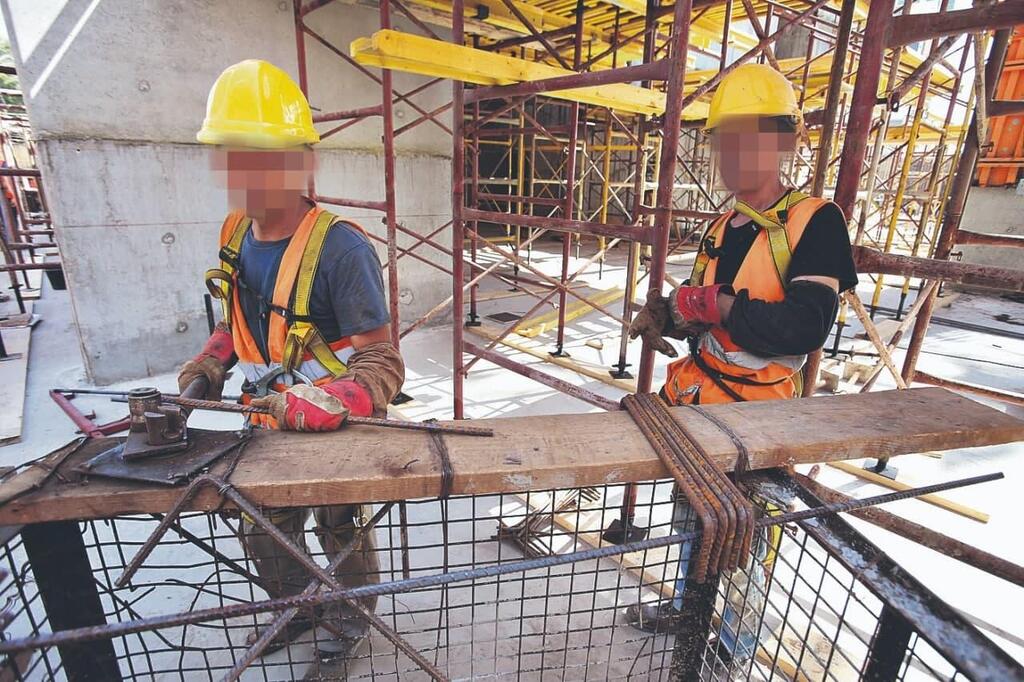
“The first sectors are those in which Palestinians were employed, such as commerce and services: garages, supermarkets and retail, as well as industry,” he said. “The commerce and services sector received its first allocation of 2,000 workers. In hotels, we had an agreement with the Philippines and also reached an agreement with Sri Lanka. Construction workers come mainly from China, Thailand, India and Uzbekistan. Agriculture workers come mainly from Thailand. Foreign workers see Israel as a desirable destination because of the high wages and protection of their rights, which is not necessarily the case in other countries.”
Bringing the workers to Israel involves no small number of flights and screening procedures. Alon Harush, CEO of Shlomo Group’s service company, said company representatives flew 11 times to India with a recruitment firm and interviewed 1,000 experienced candidates, of whom 90 were selected.
“We sat in a garage in Cochin in 118-degree heat, with no air conditioning, only wet wipes we kept in the refrigerator,” said Shiran Bleish, manager of the garage network. “We understood that an interview alone was not reliable, so we rented a garage and tested them on a work case we gave them. The workers we selected had worked in India at authorized Honda and Toyota garages, and in Israel we gave them additional training.”
Harush said the company had previously employed many Palestinian workers, but since October 7, because of the shortage, it has offered young Israelis mechanics training at its expense, with no demand.
“We couldn’t even put together one class, even though a senior Israeli mechanic can now demand up to 18,000 shekels a month,” he said. “There has been a 40% increase in mechanics’ wages since the war. A certain percentage of the sharp rise in car insurance prices is a byproduct of the rise in labor-hour costs in the sector.
7 View gallery
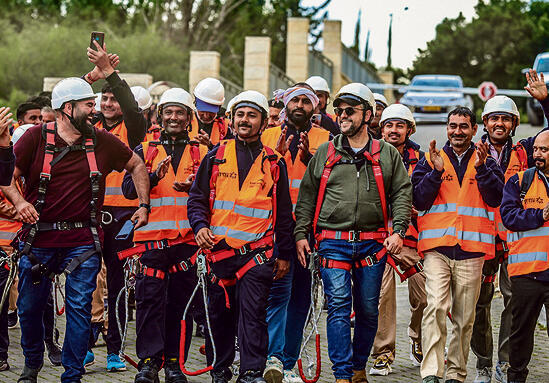
Foreign workers from India during a construction industry training day
(Photo: Avigail Uzi)
“One advantage of bringing foreign workers is that it moderates wage increases. The cost of a foreign worker is about 10,000 shekels a month, several times what they earned in India. Today they make up 50% of the workforce in the garage. The examiners and management are still Israeli.”
These are not contract workers, but salaried employees of the garage.
“We were pioneers in bringing foreign workers to garages,” Harush said. “They are loyal, have a strong work ethic and are grateful for everything. Bringing a foreign worker means adopting him. We rented apartments for them in Lod, and we take care of all their conditions, their holidays, trips around the country and lunches from an Indian restaurant in Tel Aviv. They don’t smoke, barely drink, don’t miss workdays, are very polite and are good mechanics. It’s a win-win for us, for the state and for them.”
Pavan Coutinho, 26, works as a mechanic at the Holon garage.
“I grew up in a small village in India. My father is a farmer. I studied mechanics, passed the licensing tests and worked in the profession in Saudi Arabia before I came to Israel,” he said. “The conditions there were difficult, hotter and more humid than in India. There is only desert, no air conditioning in the garages, no ventilation and the salary was bad.
“After six months I returned to India. I went to Dubai even though the salary was low because I needed six years of professional experience. Corporations in India, like Toyota and Honda, require workers with six years of experience. I found out online that Shlomo was looking for mechanics in Israel. I traveled to Cochin to meet them. It was 1,300 kilometers from my village. I traveled by train day and night to get there.”
Asked about Israel, he said: “We are happy here. We were received nicely. My boss is the person who tested me in India, and I was happy to meet him here. There, we were under pressure and forced to work overtime. In Israel, we finish work on time. The salary is much better than in India. We send part of it to our families and save the rest. I also got promoted at work and was trained to perform diagnostics with devices.
“We live in Ramla and Lod, six to an apartment. We like the Ramla market. There is a grocery store with Indian food and everything in the market is fresh and cheap. On our days off we go to Tel Aviv. I have an aunt in Jerusalem who has worked in Israel for many years as a caregiver, and we have also found new Indian friends here.”
“We feel safe. My family worried at first. I told them we are safer here than in India.”
At the Hatzi Hinam supermarket in Sharonim, Hod Hasharon, one of the largest branches in the country, foreign workers from Sri Lanka can be found in every position: stocking shelves, at the butcher counter, in the deli and at the checkout.
Store manager Ofir Mordechai said Moti Kuperly, a partner in the chain, traveled to Sri Lanka with a manpower company to select the workers.
“The branch currently has 370 employees, 100 of them from Sri Lanka,” Mordechai said. “They are very cultured and polite people, with great respect for their employers. We are very satisfied. We give them an express ulpan for the necessary words. The work is simple, and we assign them escorts at the beginning. Customers received them with love. The branch is spotless and the shelves are full.
“There are a few cases where a customer asks something more complicated, like ‘Where is the dulce de leche with coconut?’ and complains that they are not understood, but we have floor staff in the branch who immediately solve the problem.”
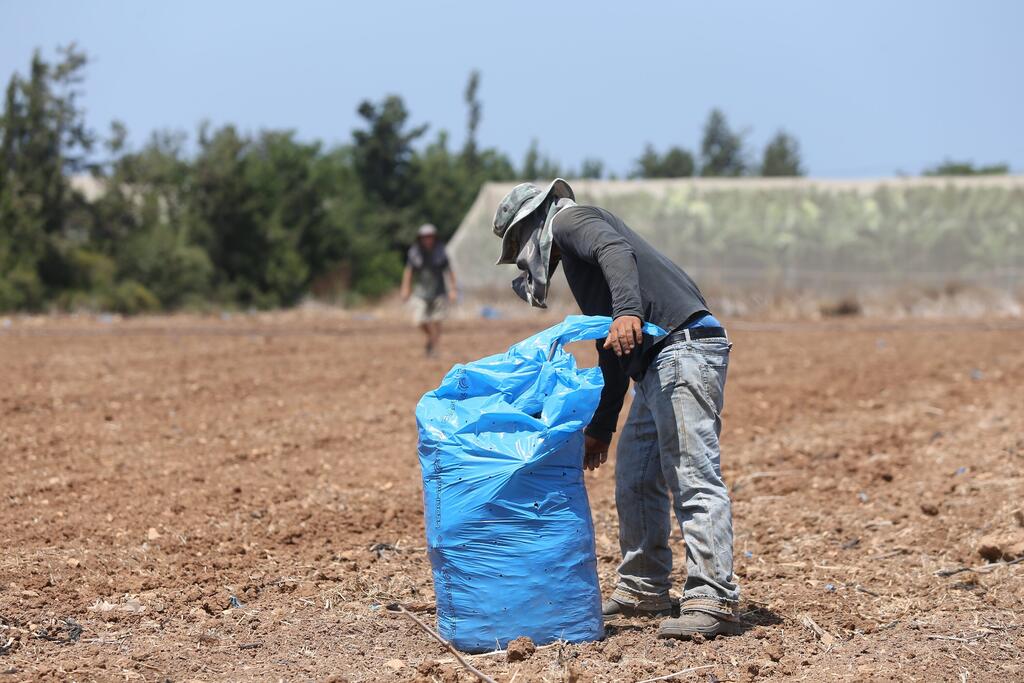
Kason Chatungara, 36, from Sri Lanka, has already been promoted to supervise 30 food stockers together with Ira, a longtime immigrant from the former Soviet Union who has worked at the chain for 25 years.
“My first job abroad was in Russia in 2017,” he said. “I worked for seven years in a cafe in St. Petersburg. The salary was not good enough and I returned to Sri Lanka. In 2024, I saw that they were looking for workers in Israel. My friends were already here and highly recommended it. Salaries in Israel are high. I was promoted to supervisor and that added to my salary.
“When I arrived, they arranged housing for us in Or Yehuda. Now I rented an apartment with friends in Hod Hasharon, closer to work. I like the supermarket, customers receive us nicely, I learned to speak Russian and now I am learning Hebrew.”
“It’s good. On Saturdays we travel. I like Haifa and the Baha’i Gardens, and also Tiberias. The food is also good. I like hummus in pita.”
“During the war we had a shelter. Everything was fine. Sri Lanka is not exactly quiet either.”
At Yohananof, the chain chose workers from Thailand. Today, 300 are employed across the country and, according to Eitan Yohananof, CEO and owner of the chain, they are an important part of its operations.
“This is a project in which we invested significant resources,” Yohananof said. “We make sure to provide incentives, welfare support and full personal guidance, and we see them as an inseparable part of the Yohananof family.”
Asked about the difficulty of finding Israeli workers for supermarkets, he said: “You have to understand, most of Israel’s younger generation is not interested in working in a supermarket in these positions. And that’s fine. The labor market is changing, and there are fields in which we will have to bring in workers from outside.
“Take the cashier position, for example. Today, it is extremely difficult to recruit for that job. I would be happy for Israeli candidates to approach me, but there simply aren’t any.”
On the workers’ conditions, Yohananof added: “Let it be clear that these workers do not cost less than Israeli workers. As I said, it is difficult to find Israeli workers, and bringing in foreign workers, while creating a full support system and taking care of all their needs, paying fair wages and providing all conditions, does not cost the chain less.”

Rayah Mizrahi, Yohananof’s human resources manager, said branch managers had been trained to manage foreign workers.
“As part of the investment in the process, we integrated the language of their country of origin into the company’s computer systems,” she said. “Their success and smooth integration at work are important to us.”
At the Yohananof branch in Modi’in, four workers who arrived in Israel nine months ago were interviewed. In all, the branch employs 20 foreign workers. Those interviewed live in Be’er Ya’akov, with housing arranged by the chain. They arrive by organized transportation every morning and return the same way at the end of their shift. Yohananof pays most of the rent, while the workers contribute only a symbolic amount.
Biya, 33, worked in agriculture in Thailand. Today he stocks the frozen food department at Yohananof.
“I don’t think about another place to work. I feel very good here, but if I get another opportunity for an additional position, I will work hard to succeed and advance,” he said.
Asked how he manages with the language, he said: “The language issue is not simple and sometimes makes things difficult, but we use Google Translate and manage just fine. I save my salary every month. My goal is to make good money and go back to build myself a small house in my town.”
La, 30, works in the warehouse unloading goods. Married and the father of a child, he came to Israel several months ago with no supermarket experience.
“In Thailand, I actually worked as a car electrician,” he said. “So for now I am unloading goods, but I very much want to advance and move into a technical position. The language is of course a problem, so we are slowly learning Hebrew, and I believe that later I will work here in my profession. What is certain is that the war does not stress me at all. The language is the main problem.”
Fang, who stocks the beverage shelves at the Yohananof branch in Kiryat Shmona, has experienced the war more intensely.
“For me, even though there is a real war now, many sirens and not much time to run and seek shelter, I manage well,” he said. “Our managers at the store and our friends at work look after each other. We are all in the same situation and already practiced. I also feel completely protected. We have a shelter, and when there is a siren, I automatically leave the shelves and run to it.
“Yes, it happens many times a day and also at night, but it will not make me leave the branch for a store in Tel Aviv. My conditions here are very good.”
Su Yan, 51, from China, is a father of two who has worked in Israel as a tiler in the construction industry for 10 years. In the afternoon, after finishing work at the construction site, he earns extra income through private jobs.
“I’ve been on this route for 10 years. Every four years I leave so there won’t be a visa issue, and then I return to work here again,” he said. “I have two children in China, and I managed to build the house there with my own hands through working around the clock in Israel. I also have good conditions and good treatment from my boss.”
Did the war not deter him?
“The work here brings in so much money that the war is not a reason to leave,” he said. “On the contrary, in the past two years I feel that they need us more and more, so my amount of work has only increased.
“There is no one to work in construction, only the foreign workers. Palestinians from Gaza cannot return to work in construction in Israel, and Israelis, as I quickly learned, are very spoiled when it comes to hard jobs. So that is our luck, the foreign workers’ luck, that they need us not only in construction, but also in agriculture, garages and supermarkets. And they pay us well for it. You can definitely save for a house, which would not have happened if I had kept working in China. Salaries there are very low and the work is harder.”
Is importing foreign workers really good for everyone? There is no doubt that in the short term they solve an acute manpower shortage and raise productivity. In the long term, Prof. Yossi Spiegel of Tel Aviv University’s Coller School of Management has reservations.
“Unemployment in Israel’s labor market is low and it is hard to find workers. Some are still in reserves. Haredim generally prefer not to work, or to work in religious or teaching jobs. They do not want to work in supermarkets. There are many working hands missing,” Spiegel said.
“Until the war, Israel solved the problem with Palestinian workers, whom there is currently no willingness to bring from Gaza or the West Bank. So the solution is to bring foreign workers. But for example, there was an argument that because Israel’s construction industry is based on cheap labor, it prevented an incentive for contractors to move to innovative construction methods.
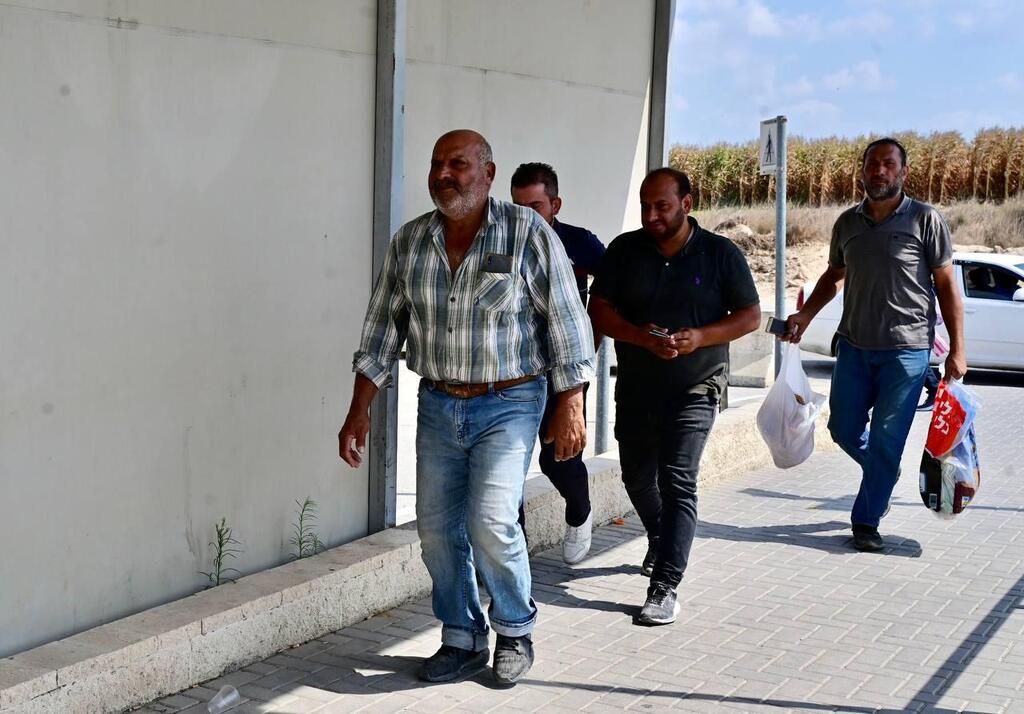
“We became addicted to cheap labor. Now they have replaced the Palestinians with foreign workers who have a strong work ethic. We see again and again that a short-term problem is solved, not a long-term one.
“These are workers in their 30s who want a family and start one here, and after the children grow up as Israelis, at age 10, the state decides to deport them. It is a tremendous injustice to children who grew up here. It is heartbreaking. Those who are not deported live in fear. The State of Israel is smart when it needs to bring in workers, but not smart when it needs to deal with the fact that they also want to live here.”
Spiegel compared the situation to Germany, which brought workers from Turkey after World War II.
“They stayed, and some continue to preserve their culture. In every big city there is a Turkish neighborhood, and sometimes frictions are created with the locals,” he said. “Phenomena such as SSQ, the gang of children of foreign workers in south Tel Aviv who are exploited by criminal organizations, will intensify unless the state treats them not only as workers but as human beings with a full range of needs.
“Israeli society is not the most tolerant. Even among ourselves there are disputes. Bringing foreign workers has cultural advantages, but a state that defines itself as Jewish is not exactly open to foreign religions. The Israeli government is not prepared to deal with migrants. It pretends they do not exist.”
Yonatan Primo, CEO of the Central Bureau for Foreign Workers, a private company that imports foreign labor, described the process of absorbing workers in Israel.
“When an employer who wants to hire foreign workers approaches us, we contact recruitment companies in countries with which we have agreements, handle the bureaucracy with the state and help the employer screen candidates,” Primo said. “After recruitment is completed and the worker receives a visa, he arrives in Israel. We wait for him at the airport and already there open a bank account for him, provide an Israeli cellphone SIM card, arrange health insurance and issue a Rav-Kav public transportation card. From there, we take him to his apartment with an initial absorption package, food and so on.
“We rent the apartments and house workers according to the employer’s requirement, in accordance with the proper housing law, which determines how many square meters of the apartment are allocated to each worker, 4 meters. If more than eight workers are housed in an apartment, there must be two bathrooms, a refrigerator, a stove, hot water, air conditioning, a separate bed for each worker and a personal wardrobe.
“We also provide repair service for the apartment, pay the rent and receive an overall sum from the employer for all the services. We accompany the worker all the way. Israel is one of the strictest countries in favor of workers.”