
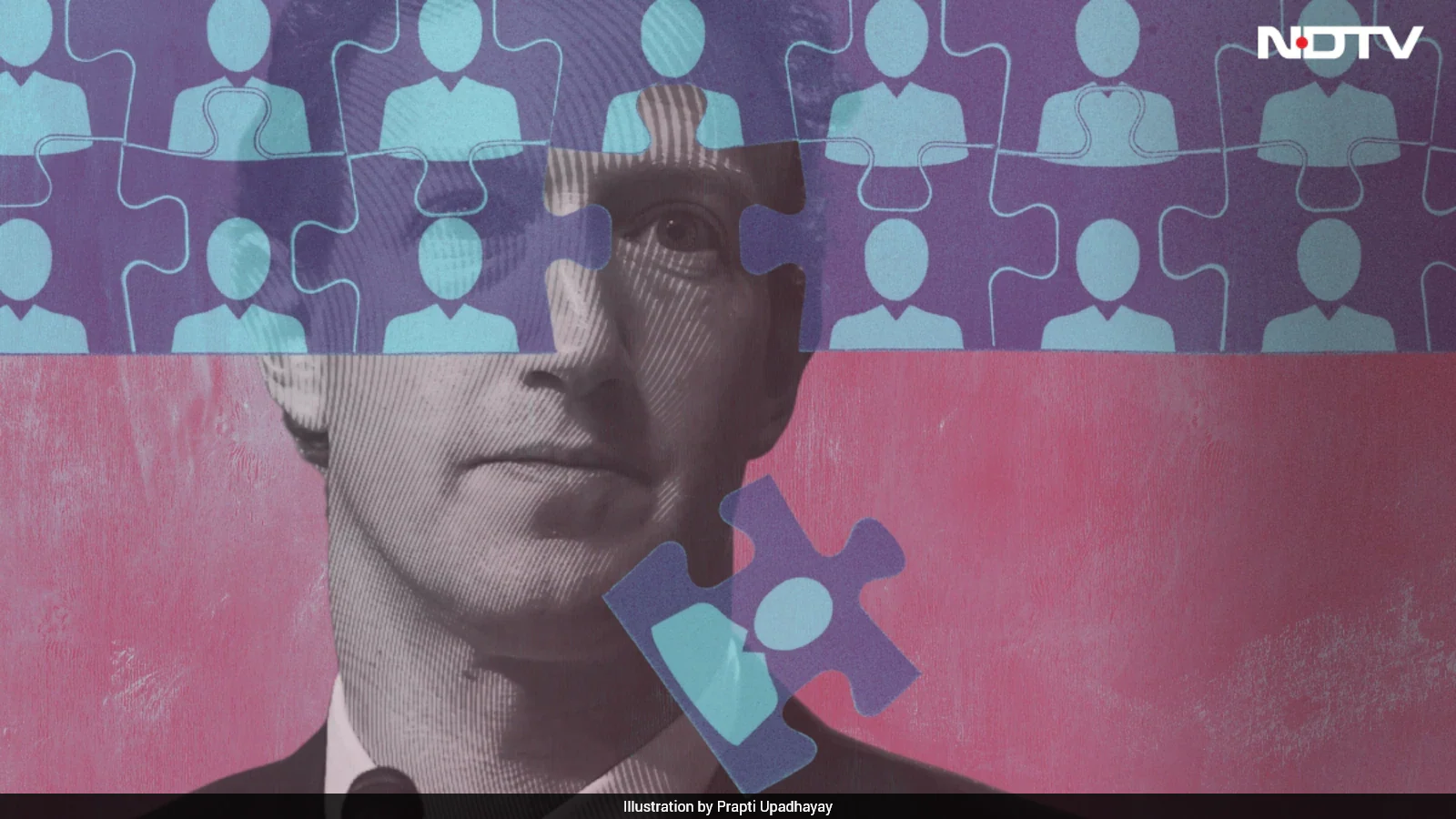
Will I still have a job next month?
For a data science professional in the Bay Area, that question occupied every quiet moment of April and the first half of May – the feeding hours, the sleepless nights, the small windows when a new mother might otherwise simply breathe.
She would. But her entire team of nine would not.
In April, Meta employees were told that 8,000 or 10 per cent of the workforce would be laid off in May as the company readied itself for the era of artificial intelligence. Thousands more would be reassigned to AI initiatives.
Advertisement – Scroll to continue
The weeks of waiting were their own kind of ordeal for Meera (name changed): “I felt anxious throughout the entire period because being laid off would have meant spending the remainder of my baby bonding time searching for a new job or having to return to India, instead of focusing on my baby’s healthy growth and my own recovery”.
“Uprooting our lives at that stage would have been incredibly difficult and caused immense anxiety,” she said.
On May 20, the bad news travelled to the ones not so lucky via emails, arriving at the crack of dawn. It reached employees in Singapore first, at 4 am local time, then rolled westward – UK, then US, landing in inboxes early morning across time zones.
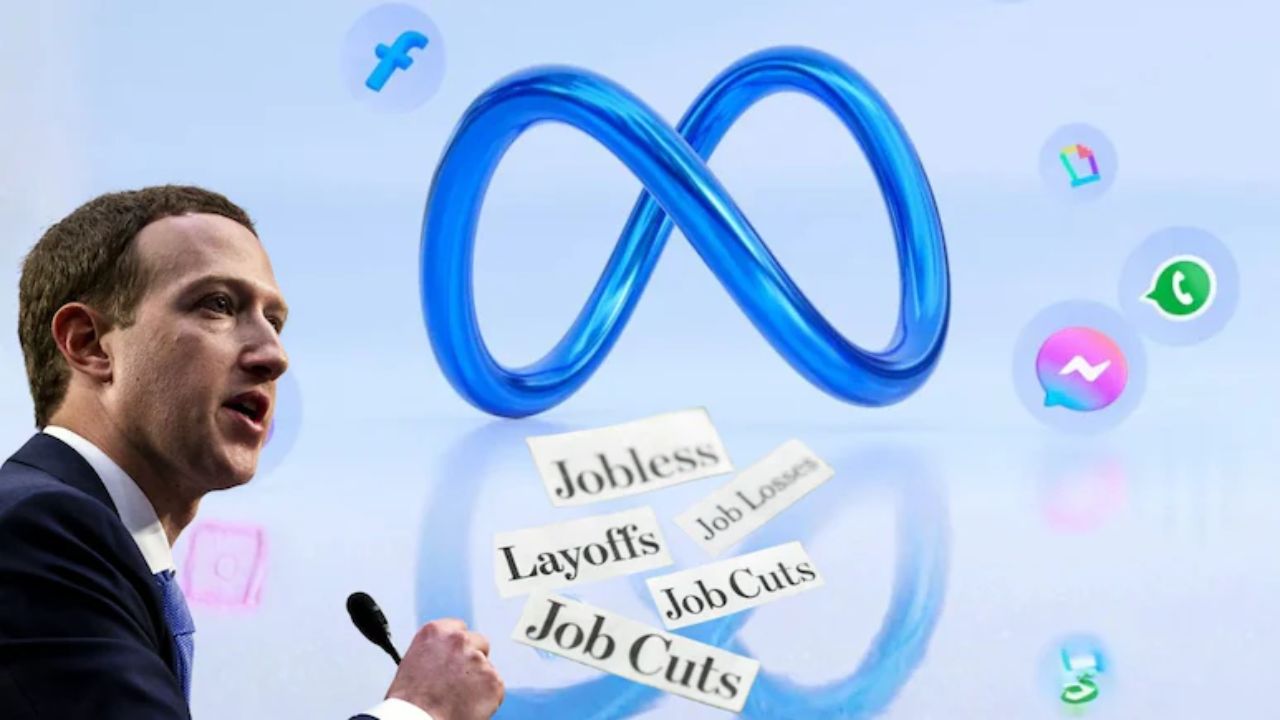
Meta cut 8,000 or 10 per cent of its workforce in May.
The layoff spared Meera’s mailbox. It saved her from the 60-day visa clock that became a waking nightmare for many H-1B visa holders caught in the cuts.
Her survival came with its own cost. Her team was gone, and with them, her managerial role. She has since been moved to an individual contributor position, a change consistent with reports that Meta has been moving toward a flatter organisational model, one where fewer managers oversee larger technical teams.
Opinion | Panic In Silicon Valley: Why 15,000 Indians Fled US Last Year – With More On Their Way
She returns to work in two to three months, to responsibilities that are still being defined. “While my manager provided a brief overview of what to expect, the actual roles and responsibilities will be defined closer to my joining date, given the dynamic nature of the industry.”
Meera had joined the world’s biggest social media company nearly four years ago, crystal clear on what she was signing up for. The draw wasn’t amazing work culture – “Meta wasn’t known for that anyway,” she said. It was the career and compensation bump up. However, she was “pleasantly surprised” by the culture within her team. Many of them are now gone.
In her time at Meta, she sensed a significant increase in the performance pressure, a shift that tracked closely with the changes in the job market post-pandemic
During the pandemic, the company, like its peers, aggressively increased headcount to meet a surge in social media usage by stuck-at-home consumers. But business suffered in 2022 as advertisers and consumers pulled back, the pandemic boom evaporating almost as quickly as it had arrived.
CEO Mark Zuckerberg moved fast.
Mark Zuckerberg said he did not expect additional company-wide layoffs this year.
In the first half of 2022, Meta decided to cut hiring targets and cranked up performance standards that were relaxed during COVID-19.
In an internal Q&A session, he was blunt: “Realistically, there are probably a bunch of people at the company who shouldn’t be here”.
He soon acted on those words.
In November that year, Meta announced mass layoffs – the biggest that year and the first in the company’s 18-year history. It decided to cut more than 11,000 jobs or 13 per cent of its workforce.
Zuckerberg acknowledged he had overhired. “I got this wrong, and I take responsibility for that,” he said in a message to staffers as the company’s stock was in free fall.
It was, as it turned out, only the beginning.
Three years on, the cuts have expanded from 11,000 to more than 30,000.
In a memo, Zuckerberg framed the cuts as an existential necessity.
“AI is the most consequential technology of our lifetimes…The companies that lead the way will define the next generation,” he said.
Not everyone found that framing convincing.
Nvidia CEO Jensen Huang said CEOs who blame AI for layoffs are “lazy” and that it doesn’t make sense from a business perspective that companies are already utilising AI to such an extent people are being replaced: “I really hate that,” he said.
Meera’s own reading was more nuanced. A major shift in expectations and workflow, she said, came with Meta’s push to leverage AI in daily work. “It began with teams voluntarily opting to use AI and eventually became a company-wide mandate.”
As for whether AI was actively absorbing work: “Currently, AI is being leveraged to increase output per person rather than actively taking away tasks.”
Read | US Tech Sector Announces Its Highest Layoffs In Almost Two Years; The Reason Is…
The numbers tell a starker story. US employers announced just over 97,000 job cuts in May 2026 and according to reports based on company announcements, AI was the most cited reason.
Muralikrishnan B, ex-president, Xiaomi India, believes the alarm is being overstated.
“Surely, there would be some creative disruption in the short term but layoffs used to happen even before AI. The only way out for employees is to upskill,” he told NDTV.
Meta, meanwhile, is pressing forward. The social media giant has been pumping eye-watering sums into AI – offering enormous pay packages to court top researchers in its superintelligence team, announcing plans to invest $600 billion to build data centres by 2028 and acquiring Moltbook, a social networking platform built for AI agents. According to reports, it is also spending at least $2 billion to buy Chinese AI startup, Manus.
The Financial Times has reported that Meta is also considering raising tens of billions of dollars in a stock offering as it seeks new sources of capital to fund its AI ambitions. On June 6, shares in Meta fell 5.5 per cent following the report on the new stock offering.
Read | She Built AI Tool That Replaced Her: Man’s Claim On Meta Layoff Goes Viral
For employees watching all of this from the inside, Zuckerberg has offered one reassurance: “I want to be clear that we do not expect other company-wide layoffs this year.”
Meera says she would rather be inside this machine than outside. “Given that AI is fundamentally reshaping the world, I would prefer to be at a company actively driving these changes rather than one playing catch-up once the shifts have already occurred.”
But the experience has changed something in her. “It reinforces the notion that employees are very dispensable, and dedicating long hours at work at the expense of one’s personal and family time is often unwarranted.”
She would soon resume work. But, in these months, she faced a choice that no performance review will ever capture: whether to spend her maternity leave upskilling to protect her position or simply be present with her child.
“I have chosen to dedicate my full focus to my family for the time being. I will prioritise upskilling and performance once I am back on the job,” she said.
(The primary source in this piece has been granted anonymity at her request. Her name has been changed.)